
5 Things Adult Artists Can Learn From Children’s Art
From time to time, the art world becomes fascinated with a young child whose paintings seem unusually expressive or sophisticated for their age. News headlines describe them as “child prodigies” or “art geniuses,” and their paintings begin to sell for prices that many adult artists struggle to achieve after years of practice.

For the general public and some practicing artist, this phenomenon can feel puzzling. How can a child’s painting command such attention and value? Is it purely talent, or are there other forces shaping the story behind these works?
There are many child artists gaining recognition for presenting paintings that feel unexpectedly sophisticated and unconventional, such as Andres Valencia, Aelita Andre, Kieron Williamson, Marla Olmstead, and Ace-Liam Ankrah. These children are not necessarily individuals with autism, where artistic ability may emerge alongside unique neurological conditions. They may not display the same highly specialised abilities sometimes seen in autistic individuals, such as extraordinary focus or heightened perception in a particular field.
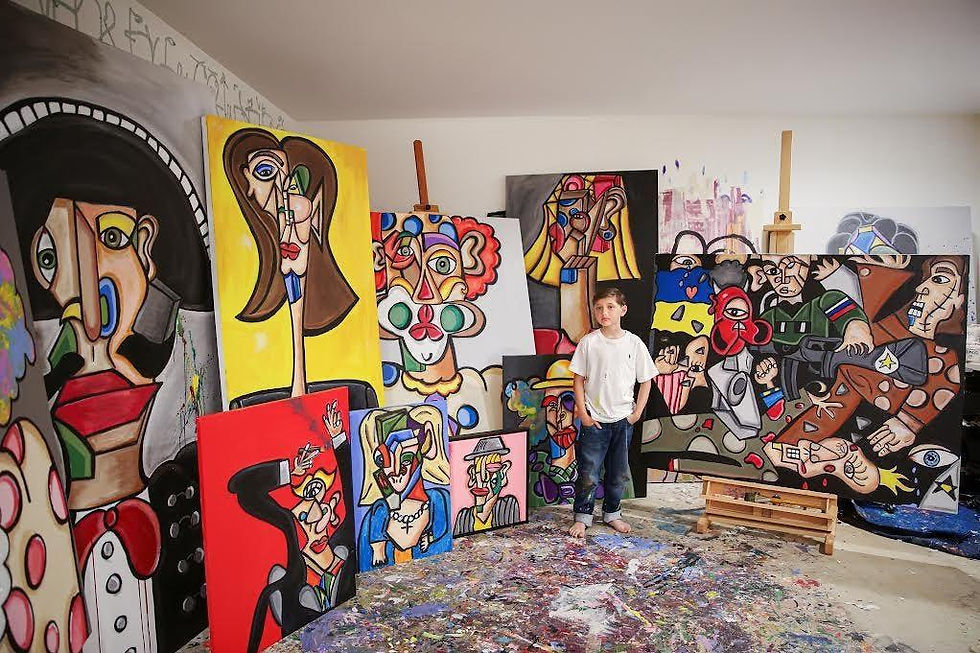
Andres Valencia - a striking example of how a young artist can capture global attention through bold, Cubist-inspired paintings that echo influences like Picasso while still feeling instinctive and raw. His work stands out not only for its confident composition and color, but also for the rarity of seeing such visual language emerge at a very young age.
The high prices and rapid rise of his paintings are not driven by talent alone—they are also shaped by the dynamics of the contemporary art market, where galleries, collectors, and media narratives play a significant role in creating visibility and demand. Strategic promotion, curated exhibitions, and access to influential networks can amplify a young artist’s presence, raising questions about how much of the hype is organic versus constructed. It is also fair to consider whether family connections, resources, or proximity to the art world have helped accelerate this exposure. In reality, his success likely sits at the intersection of genuine artistic ability, compelling storytelling, and a well-supported entry into the art industry.
Some view it with disdain; others see it as part of the inner workings of the art industry. Yet one thing remains clear: adult artists can learn a great deal from children who demonstrate genuine artistic instinct. When we observe how these young creators approach drawing and painting, we are often reminded of qualities that many adult artists gradually lose as they grow older, become technically trained, or work within professional expectations.
Children often create with a kind of freedom that adults spend years trying to rediscover.

Freedom From Fear of Judgment
Children rarely begin a drawing with the fear of failure. They do not worry about whether the work will be good enough, whether it fits a recognizable style, or whether others will approve of it. They simply begin.
This freedom allows their creativity to flow naturally. Adult artists, on the other hand, often become cautious after years of critique, comparison, and professional pressure. Observing young artists reminds us that creativity thrives when the mind is not constantly evaluating itself.
In many ways, the courage to make the first mark without hesitation is already a powerful artistic quality.
Intuitive Decision-Making
Children often make artistic decisions based on instinct rather than theory. Their color choices, compositions, and shapes are guided by feeling rather than formal rules.
Interestingly, many great masters eventually return to this same approach after mastering technique. Once the fundamentals are internalized, intuition becomes the guiding force again. Children demonstrate that instinctive decision-making can lead to powerful and authentic visual expression.
Expression Before Perfection
Young artists are usually less concerned with perfect proportions or academic correctness. What matters to them is expressing what they see, feel, or imagine.
Because of this, their work often carries a strong emotional presence. Adult artists can sometimes become overly focused on technical perfection, forgetting that expression and meaning are the true heart of art.
When we look at children’s drawings, we are often reminded that art is not only about accuracy — it is about communication.
Curiosity and Playfulness
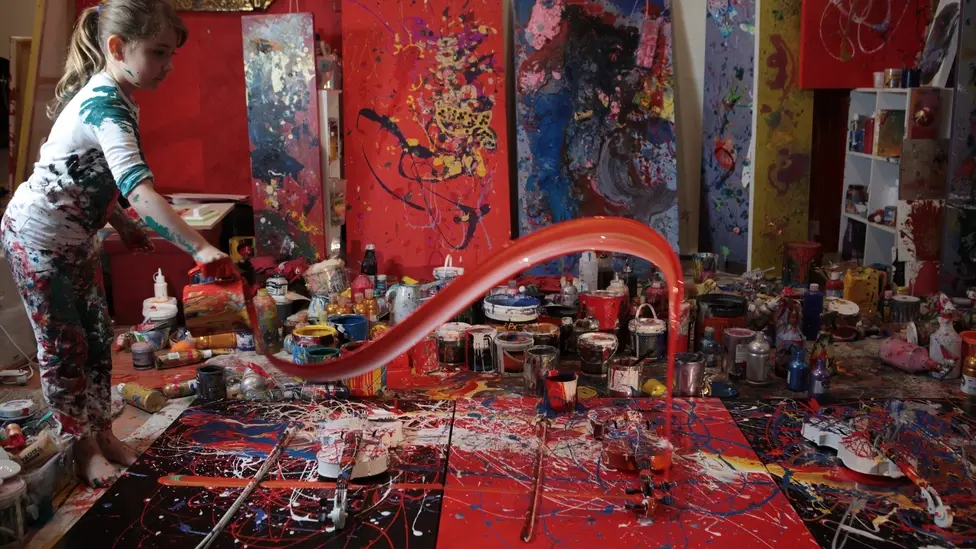
Children approach art like an exploration. They experiment freely with materials, shapes, and ideas. A drawing can easily turn into a story, a character, or an entire imaginary world.
This playful curiosity keeps their creativity alive. For adult artists, reconnecting with this sense of exploration can lead to unexpected discoveries and new directions in their work.
Innovation in art often begins with the willingness to play.
Authenticity
Perhaps the most important lesson children offer is authenticity. They do not create art to impress collectors, critics, or social media audiences. They create because they feel an urge to make something.
This sincerity often gives their work a direct emotional quality. When adult artists are able to maintain this same honesty in their practice, their work often becomes more powerful and personal.
Authenticity is something that cannot be easily taught, yet children often possess it naturally.
A Reflection on How We See Children’s Art
Observing talented child artists is not about comparing skill levels. Instead, it offers a reminder of what creativity looked like before self-doubt, expectations, and external pressures began to shape the artistic process.
Many professional artists spend years studying anatomy, perspective, composition, and technique. Yet after mastering these skills, the real challenge often becomes rediscovering the freedom and sincerity that children naturally possess.
This is where an interesting contrast appears.
For the general public, children’s art can sometimes be misunderstood. Without exposure to art education, many people judge artwork mainly by realism or technical polish. In that framework, the value of children’s art can be difficult to appreciate. Yet among artists themselves, the response is often quite different. Many adult artists look at children’s drawings with curiosity and admiration, recognizing the spontaneity, honesty, and creative instinct within them.
Sometimes the most surprising teachers in art are the ones who have only just begun drawing.


Comments