
How I Designed a Portrait Drawing Workshop
There is a distinct magic that happens when a student shifts from drawing what they think they see to drawing what is actually in front of them. As a portrait painter, my relationship with the human face has been built on years of quiet, rigorous observation. But translating that internal library of experience into a structured, accessible workshop for others? That was an entirely different beast.

When I set out to design and launch my portrait drawing workshop, my goal wasn’t just to host a few hours of sketching. I wanted to create a comprehensive, thoughtful module that would genuinely lift the average standard of portrait drawing here in Singapore—making this traditionally elite, gatekept skill affordable and deeply achievable for anyone who wants to learn.
Here is the story of how that curriculum came to life, the obstacles I faced, and the essential truths I discovered about how people actually learn to see.
1.Learning from the Masters

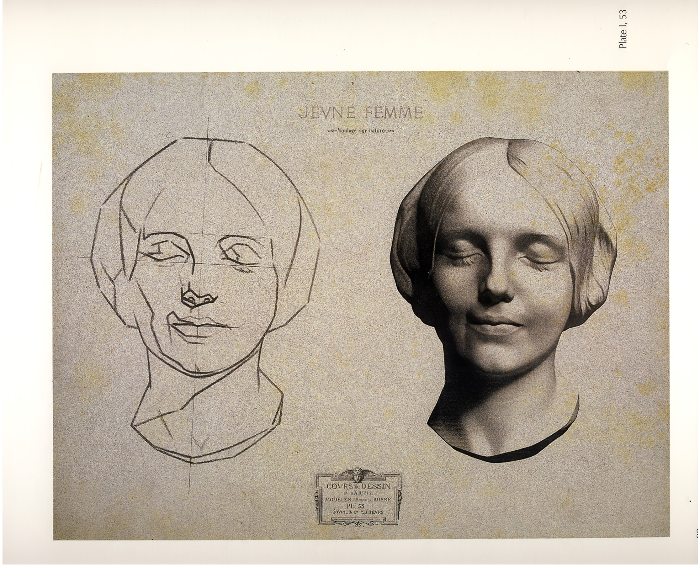

To build something truly impactful, I didn’t want to rely solely on my own habits or personal artistic journey. I spent weeks deconstructing and taking references from multiple highly acclaimed classical teaching modules. Through my own learning experience, I knew that a well-designed module shouldn't just help students pick up technical skills quickly; it should naturally build their confidence and spark their creativity.
My biggest obstacle was constraint: condensing centuries of classical art essentials into a tight, 8-lesson framework. It wasn't a lack of information, but the sheer volume of it. Classical ateliers often demand months of rendering a single plaster cast before a student ever touches a live face. In a modern workshop format, that kind of rigidity kills inspiration.
My milestone came when I successfully synthesized these grand traditions into a streamlined, cohesive curriculum. I realized that students don't need a dozen conflicting theoretical systems; they need a single, reliable visual vocabulary. By merging structural block-ins with organic anatomical landmarks, I built a hybrid approach that feels thorough yet remains incredibly intuitive to follow.
2. Speeding Up the Curve Through My Own Obstacles

When designing the curriculum, I looked directly at my own artistic growth, tracking the exact milestones that accelerated my journey, as well as the stubborn plateaus that held me back for years.
In particular, I remembered the agonizing frustration of getting stuck in "detail traps"—spending hours meticulously rendering eyes or skin texture on a features that were completely misaligned with the rest of the skull. In the foundational stages of drawing, these micro-details are entirely redundant.
To save my students from that exact trap, I deliberately inverted the traditional learning process. We don't start with eyes, noses, or lips. We start with the large, sweeping planes of the head and the abstract shapes of shadow. By sharing my own past missteps openly, I give my students a shortcut past the standard beginner pitfalls, dramatically speeding up their learning curve within just a few sessions.
3. The Golden Rule: Testing the Groundwork

If there is one absolute law I established for myself, it is this: Always practice and stress-test the exercise to guarantee results before ever teaching it.
Before a single student sat down at an easel, I spent hours simulating the exact constraints of the workshop by putting myself entirely in their shoes. Most of my students are total beginners who carry a deep fear of making mistakes or drawing an "ugly" face. Getting stuck or feeling like they are failing is not a positive motivator.
To fix this, I had to actively unlearn my own instincts, see through their eyes, and carefully test my live demonstrations. This allowed me to build a foolproof, step-by-step method that removes the anxiety of the total beginners and replaces it with encouragement and inspiration. Teaching is an act of trust; if a specific exercise didn't reliably yield a breakthrough during my tests, it was cut.
4. What Truly Matters: Cultivating a Lifelong Skill

As much as I want my students to produce great work during class, my ultimate goal is for them to take that knowledge home and create independently.
I focused the core of the workshop on what is truly essential, organic, and foundational. By centering the lessons on the physics of light, structural accuracy, and line weight, students leave the workshop with more than just a finished drawing to hang on the wall. They leave with a trained eye—a portable, lifelong skill that fundamentally changes how they perceive the world around them.
A Vision for the Local Community
Portraiture has a reputation for being expensive, exclusive, and intimidatingly difficult. I have received countless comments from aspiring art learners telling me that drawing portraits feels utterly impossible. Furthermore, the market price for high-level portrait courses is often prohibitively high.
But I firmly believe we can change that narrative.
As an instructor, I treat each lesson as an opportunity to learn, constantly adjusting the curriculum to ensure the ultimate learning experience for my students.
This workshop is my love letter to the local art scene. By offering a thoughtful, deeply comprehensive education at an accessible price point, my hope is to foster a vibrant community of passionate, artistic individuals right here in Singapore. Seeing the pride in a student's eyes when their marks suddenly click into a breathing, recognizable human form makes every hour of design, testing, and formatting entirely worth it.

Comments